As of my most recent post, recapping April's readings, I had tallied 46 books. Here I am now to not only share my progress in the month of May, but also to up the ante a bit. Seeing that I hit 52 books not quite halfway through the year, and looking forward to the summer months with fewer daily commitments, I've decided to update my goal to 100 books this year. I'm well on my way and looking forward to more!
Here's what I've managed to ingest since my last update::
47/52: Random Essays on Mathematics, Education and Computers, by David G. Kemeny
As I noted in my Goodreads review, I highly recommend this book on its "Mathematics" and "Education" essays alone. You can skip the "Computers" section and not miss anything, but if you find yourself intrigued by what a 1960s mathematician predicted about the future of technology and its implementation, read away. There are so many quotable passages in this book, and its essays really resonated with many of viewpoints on math and undergraduate education. It seems to be a bit of a rare book, too, having been published by the MAA back in the day and not available anywhere else. (Indeed, I had to add the book to Goodreads myself.)

I love Stephen Fry. I bubble and burst with sickly sweet love for him. (I hope I'm doing his enthusiasm for wordsmithery veritable justice here.) This is a collection of various newspaper articles, radio scripts, and even a play he wrote, which you cannot find published elsewhere. If you're a Fry fan already, this is an absolute "must read" and is highly recommended. I admittedly skimmed through one small section that contained a bunch of reviews of books by British authors I'd never heard of. But I devoured thrice over some of his more penetrable essays, including a delightfully memorable one about the word "fuck" and its usage. I cannot imagine such a writeup appearing in a national American newspaper. God bless ye Britons.

I started listening to this as an audiobook, at first. As a reasonably avid listener to Maron's WTF Podcast, I looked forward to hearing his voice read these words. A confluence of three factors led me to eventually read this in print form, after listening to only the first chapter: (1) my audiobook app's innate volume is set irrevocably low, and a passing car renders words completely out of earshot, despite an earbud set firmly in the requisite orifice; (2) I realized that I'm so accustomed to Maron's voice, tone, and cadences, that I can read his printed words "aloud" in my head effectively without his intervention; and (3) I stumbled on a hardcover copy of this in the library. So, I read it. It was good. If you are, as well, a Maron fan, then this is another "must read". Even if you're not, though, this is a well-written memoir of a life in comedy and … well, a life in life.

I've only read one short novel by Murakami before. I'm admittedly daunted by the thickness of, say, IQ84. So I dabbled with After Dark, and now with this collection of short stories. But they're so damn great. I have to read more. Murakami finds a way to describe and make wholly interesting the inner workings of a character's mind, without literally writing about their thoughts or emotions. This is hard to describe, I'm realizing now. You just have to read him. I plan on delving into more of his oeuvre in the very near future.

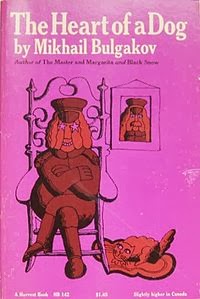
I bought a used copy of this book a few years ago but only just read it now. I'm glad I did. It was a quick read (two days or so) and totally worth it. I believe I need to reread this again to fully understand its satirical aspects and appreciate its place in the canon of American literature. But I'll be damned if I didn't laugh out loud at parts of this, while scratching my head at others. What else can you ask for from a novel?

I've found many interesting books while perusing the graphic novel section of the Boston Public Library. This is definitely one of those books. Everyone "knows" Jane Goodall, and maybe even Dian Fossey, but I'd argue that very few people really know what they did and why they did it and what it all means. This book addresses that. What's more, it does so in a wholly engaging manner and can even appeal to a variety of audiences. I was totally engrossed by this book, and I can imagine a 13-year-old, say, similarly engaged. That says a lot about the way that Ottaviani crafted the story and Wicks drew the panels, but it also says a lot about the reality interweaving these three tenacious scientists. Let alone that they're all females and they all studied primates; this is just a damn good story.

Ah yes, more of Mr. Fry. I knew absolutely none of this about the man. This is the story of his life from age 0ish to 18ish. It is incredibly forthright and arguably confrontational in how frank it is. But it wholly succeeded, for me, in describing and motivating who this man has become. I like to think I understand Mr. Fry a lot more, having read this; yet, having read this, I'm sure that he will continue to surprise me.

A graphic novel about an "artist's" "struggle" in suburbia. I liked a lot of aspects of this book. The drawing style might be the selling point. It was both sparse and evocative; pure black and white with lots of shading and interesting vantage points. Considering the various scenes in the book took place in only a handful of places, I was actually quite impressed with the variety in rendering. The characters were well-developed and their interactions were rich. And the overt John Fante reference was a nice touch. (The action took place in Bandini, CA.) However, the story was a little trite, or at least frequently-enough-played-out-to-be-almost-unengaging. I dunno. I was just thinking, "Oh, a frustrated artist is a drunk still living in his hometown and thrashing against his adolescent influences? How original!" I fully enjoyed the read at the time, but it is what it is.

(This was a short book of poetry, but I'm including it amongst the other books in the "Other readings that count" section below to register as a full "read" here.) I picked this out during April (poetry month) since Ezra Pound attended my undergraduate institution. (At the same time, I picked out a collection of poetry by Robert Lowell, who attended my high school. I'm still reading that one.)
I remember trying to dive into some of Pound's Cantos a few years back and getting nowhere rapidly. This collection was a bit more inviting. Some of these poems were wholly forgettable, while others were immediately engaging. Overall, I could sense and appreciate Pound's style. His ability to conjure images and make them profound is commendable. After this, I'd like to go back and read more of his poetry. I don't know what it will do for me, but this particular collection has certainly motivated those efforts.

More genuinely sad stories from a modern short story genius. Still though, it's difficult to characterize what makes these stories sad, let alone great. Nothing is overtly depressing. It's something about D'Ambrosio's ability to craft a character and, more importantly, a character's feeling of their environment. There's one story I have in mind where a guy just moved into a new house with his wife. I recall little about the scenery, save for a tree in the backyard and the house's isolation from the rest of the town. But I can vividly evince this man's emotional reactions to the house at night, to the creakings of its floors when family visited, to its view of the nearby trees and rivers. I can't think of anyone else's writing that has this effect on me. I'm glad I discovered this writer this year.

I'm already a fervent Birbiglia fan. (He also attended my high school, and even grew up in my hometown.) I also saw the film he created from this book already. But I spotted this on the library shelves and realized I had to read it. I knew many of the jokes, from Mike's standup and the film. But everything carries through so well. These are heartfelt and undeniably honest stories. Mike is a great storyteller. And you are a human being, not a robot. So you get drawn in. Right? RIGHT?

One of the few books by which I've been genuinely disappointed :-( The goal of this collection, I gathered, is to share essays about the most interesting/notable entities in 20th century mathematics. I love this goal. And any support I show towards this book is purely based on how much they attempted to advance this goal, not how much they actually achieved towards this goal. Here are my criticisms: (1) The diversity in this book is frighteningly nonexistent. There may have been one woman mentioned. I can't even recall. No other races mentioned. They're all white men from America or Western Europe/England, plus a handful of Russians and Hungarians. What gives? (2) Amongst those that are mentioned, the essays are poorly written. "Granted", these are mostly translated from Italian (I gather, based on the editors' names) but still … there are entire nonsensical paragraphs and piss-poor sentences/vocabulary. (3) The variability is confusing. Some entries merit an eight-page essay with interview excerpts, while others garner only two pages of curt discourse. I cannot ascertain any reason for the distinctions either.
I think this book could really succeed. I wish it was better at what it tried to do. But, ultimately, this book sucks.


59/100: Chess Story and Journey Into The Past, by Stefan Zweig
I stumbled into Zweig's writings after watching The Grand Budapest Hotel in the theatre recently. (By the by, that was a great film. I'm a Wes Anderson fan, and this is also already one of my favorites of his.) The end credits declare that the script was "inspired by" the writings of Stefan Zweig. Bien sur, I checked him out at the library. I read these two novellas in a two-week span and thoroughly enjoyed them both. Indeed, I can even see the influence they might have had on Mr. Anderson's film. "Chess Story" was certainly my favorite. The "story within a story" aspect evokes the Budapest plot, and the emotional ties of Past evoke some of the film's plot elements. But forget about Anderson. These are great writings, and I would find them wholly enjoyable without the backstory of my discovery of them.

Not as good as Siddhartha. I enjoyed this very much but "understand" much less about it than I did about Hesse's other novella. What am I missing? Am I being too critical? Did I miss out on much of the religious allegory? Both? I bet it's both.

A recommended read from my mom. I sat down and read this over a two-day period while visiting my parents. I enjoyed reading this mostly for the emotional sway of the story (not so much the events), but equally as much for the recommended reading list that it generated. Indeed, the author included a multi-page list in an appendix containing all the books/authors mentioned in the text. I've already been using this as a recommendation engine, quite effectively!

I sought this out after reading the Primates book, also written (but not drawn) by Ottaviani. I knew a bit about Feynman's life, having studied physics and read a couple of his books, but this book introduced to much more of Feynman's life story than I thought imaginable in 200ish pages of comic panels. I got a sense of the man's life and personality, but I fear that this is partly because I already had an introduction to him. I wonder what a genuine Feynman n00b would get out of this. But, hey, I suppose that's not the intended audience.

I cite DeLillo as one of my favorite modern writers, but this is the most recent work of his that I've read. I enjoyed this metaphysical novella about dance, emotional commitment, mourning, human compassion, and more … I was pushed and prodded and intrigued. But, ultimately, this makes me want to go back and reread White Noise.

This is one of those "recommended reads" from the book above, The End Of Your Life Book Club. I'm glad I listened to the recommendation! This was great. I still feel the ending is ambiguous; I know that's the point, but I also haven't been able to decide either way which one I believe/prefer/understand/advocate/blah. This was very well-executed and highly recommended to modern readers.

Catching up on Klosterman. (I think Eating the Dinosaur is the only one I haven't read yet!) This is better than much of his recent non-fiction. I particularly enjoyed Chuck injecting himself, and his self-perception, into the text. I know that this could be purely sensational, but it worked. And I do believe it. I especially like thinking about him simultaneously working on The Visible Man. I was asked recently by a friend about my favorite book of this year, and I cited that novel< The Visible Man. I couldn't explain why, but after reading this non-fiction book about evil, and contemplating Klosterman's multi-year study of evil and covert observation, and considering him as an observer of human nature and culture, and … well, a whole bunch of stuff … Considering all that shit, I found this book fascinating. Disregarding all of that shit, I bet this would still be fascinating.

Genuinely one of the best fiction novels I've read this year! And yet, I've learned that this is "merely" a roman á clef, meant to describe the life and times of French painter Paul Gauguin. I stumbled into this by learning of the writer, W. Somerset Maugham, via the aforementioned book-club-vehicle, The End Of Your Life Book Club. I sought out the MAU fiction section in the library, read some dust-jackets, and chose this book. I made the right choice. This is brilliantly-written, is funny and poignant and emotionally-engaging, and serves to foster an interest in both Maugham and Gauguin. I look forward to going back to the Boston Museum of Fine Arts to see his painting, D'où Venons Nous / Que Sommes Nous / Où Allons Nous ; I've already seen it a handful of times, but I look forward to viewing it with newfound appreciation, after learning about Gauguin's life and times.
Other readings that count:
Coffee With Isaac Newton, by Michael White:
I stumbled upon this in the "science" section at the library. It's a noble pursuit, but falls far short. I bet it's difficult to mimic Newton, of course, but this is not even an interesting quasi-mimicry. I don't want to argue that Newton is more combative but … I'm sure he is. This could be a completely different work without sacrificing accuracy.
2013: Best New Poets, edited by Brenda Shaughnessy:
I'm glad I picked this up and explored it. I don't think I got a good sense of where poetry is "going" currently, but I suppose that isn't the point. Some of these were engaging and wonderful, many were entirely forgettable, and a scant handful were downright awful. So it goes. I could do no better. I'll look for more from this series.
Long Live Man, by Gregory Corso:
More vestiges of "poetry month" from April. I explored Corso a lot, thinking of his eponym on the Sonic Youth song on their "final" (gasp!) album, The Eternal. This was all well and good, and made me want to explore more.
Up next:
In the Shadow of Man, by Jane Goodall:
I even mentioned this last month, but have yet to act on it. Here I go! I want to learn more about Jane and her work with primates. Will do.
Why Public Higher Education Should Be Free, by Robert Samuels:
Admittedly, a sensational title, but that's exactly what caught my eye in the "current non-fiction" section at BPL. Working in higher education makes me even more apt to pick this up to read.
Pawnee: The Greatest Town In America, by Leslie Knope:
Found in the comedy/TV/film section at the library. I also recall seeing a YouTube video recently that is an interview of the cast/crew/writers of Parks & Rec wherein a writer admits that, after they wrote this book, they consult it regularly to make sure facts are consistent; they realize fans will call them out on shit, so they have to check!
Dad Is Fat, by Jim Gaffigan:
Listening to this on audiobook. About halfway done.
Decline and Fall, by Evelyn Waugh:
Picked this up after watching a Stephen Fry "lecture" at Sydney Opera House wherein he mentions three Ws: Wilde, Waugh, Wodehouse. I've read much of Wodehouse, and just yesterday finished The Importance of Being Earnest, but I'm a Waugh virgin.